
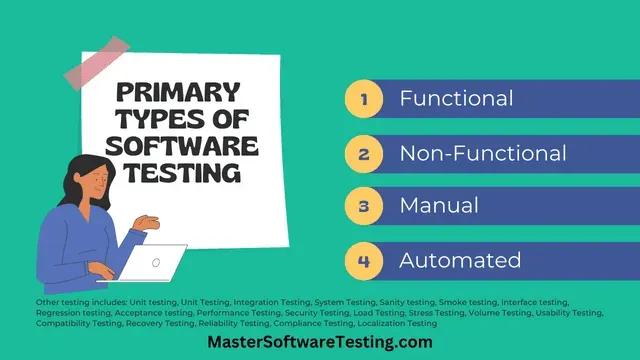
Software Testing 101 sets the stage for understanding how to balance speed, risk, and quality in software development for teams of varying sizes and disciplines. From the outset, it invites you to consider manual testing and automated testing as complementary approaches, while a broader software quality assurance mindset helps you evaluate processes, tools, and teams and the role of test automation in continuous delivery. This introductory guide outlines how to design coverage that reduces uncertainty, catches defects early, and protects core functionality through a mindful mix of checks, scripts, and human insight, while staying adaptable to different product domains. In practice, regression testing plays a key role in ensuring that new changes do not erode existing features, while risk-based prioritization helps teams decide where to invest effort. Whether you are a developer, tester, product manager, or part of a cross-functional team, embracing this framework can help you improve delivery cadence without sacrificing quality.
In other words, the discipline can be understood through a web of related concepts such as quality assurance in software development, verification activities, and continuous evaluation of product readiness. Rather than a single ritual, successful testing blends a structured testing strategy with exploratory insight, focusing on reliability, usability, performance, and security as core quality attributes. This broader view aligns with modern development practices, where teams automate routine checks, perform targeted manual testing when human judgment adds value, and continuously validate risk through feedback loops in CI/CD pipelines. By framing testing as a lifecycle activity—encompassing planning, design, execution, and learning—organizations build a resilient quality culture that extends beyond individual test cases.
Software Testing 101: Balancing Manual Testing, Automated Testing, and Test Automation for Quality
Software Testing 101 is more than a checklist of steps; it is a disciplined practice that prioritizes how software behaves under real-world conditions. Manual testing plays a critical role because human observation, intuition, and exploratory inquiry uncover issues a script can miss — especially in usability-sensitive areas and early discovery. This descriptive foundation helps teams appreciate the value of combining hands-on evaluation with scalable strategies like automated testing and test automation, ensuring that quality is built into the product from the start.
In practice, achieving high-quality software requires balancing effort, risk, and speed. Automated testing brings speed, repeatability, and broad coverage, supporting regression testing across builds and releases as systems grow in complexity. However, manual testing remains essential for exploratory work and contextual feedback. Together, these components drive a robust software quality assurance mindset that informs coverage decisions, risk assessment, and delivery cadence.
From Manual Testing to Full Software Quality Assurance: A Practical Strategy with Regression Testing
Building a practical testing strategy means weaving manual testing, automated testing, and exploratory approaches into a cohesive quality program. This alignment with software quality assurance aims to maximize coverage of critical user journeys while embedding regression testing into release cycles so that changes do not erode core functionality. By framing testing as an integrated discipline, teams can design processes that scale with demand and evolve alongside features.
In modern development, continuous testing within CI/CD pipelines ensures quality checks accompany every build. Emphasizing test automation where it adds value, maintaining reliable test data, and fostering collaboration between developers and testers are key to sustaining maintainability and speed. This approach delivers faster feedback, reduces defect leakage after releases, and helps teams deliver reliable software with greater confidence.
Frequently Asked Questions
What is Software Testing 101 and how do manual testing and automated testing fit into its approach?
Software Testing 101 is a disciplined approach to validating software behavior under real‑world conditions, not just a checklist of steps. It blends manual testing and automated testing to balance exploration with repeatable checks, ensuring coverage grows with the product. Manual testing relies on human insight to discover usability issues and edge cases that automated tests might miss, while automated testing uses test scripts to run repetitive checks across builds, delivering faster feedback. Regression testing is a core part of this framework, supported by test automation to verify that existing functionality remains stable as new features are added. Together with software quality assurance practices, Software Testing 101 helps teams manage risk, coverage, and delivery cadence.
How does regression testing fit into Software Testing 101, and when should you prefer manual testing vs automated testing within this framework?
Within Software Testing 101, regression testing ensures that changes do not break existing behavior. Automated testing (test automation) is well suited for regression, providing fast, repeatable results across releases; use automated tests to protect core paths, APIs, and business rules. Manual testing remains valuable for exploratory testing, usability evaluation, and edge cases where requirements are ambiguous or evolving. A practical strategy blends both: automate high‑value, high‑risk regressions and keep manual testing for new features and critical user journeys as part of a broader software quality assurance effort.
| Topic | Key Points |
|---|---|
| Introduction | Software Testing 101 is more than a checklist of steps. It is a disciplined approach to ensuring software behaves as expected under real world conditions. The goal is to balance effort, risk, and speed so that quality becomes a built-in feature of the development process. |
| Main Idea & Scope | Core aim: reduce uncertainty in releases. Testing expands beyond ritual to include manual, automated, test automation, and a broader quality assurance mindset that covers processes, tools, and culture. Design a strategy that fits your product and organization. |
| Manual Testing: Human Insight in Action | Definition: executing tests by hand using human observation and intuition. Valuable for exploratory testing and discovering how an application behaves in real use. |
| Manual Testing Details | When to rely: Early product discovery, ambiguous requirements, usability-sensitive areas. Deliverables: contextual feedback, early defect detection, coverage of unanticipated user paths. Best practices: clear acceptance criteria, concise test charters, time-boxed exploration, documented observations. |
| Automated Testing: Speed, Repeatability, and Scale | Uses scripts and frameworks to repeat tests across builds/releases with minimal human effort. Supports regression, performance checks, and integration validation across services. |
| Automation Benefits & When to Use | Benefits: consistency, faster feedback, tests run outside working hours. When to automate: repetitive checks, high-consequence features, APIs, and user flows that can be reliably coded. |
| Common Approaches | Unit tests, integration tests, and end-to-end tests. Frameworks, CI pipelines, and test data management enable scalable automation. |
| Test Automation: Design for Maintainability | A well-designed automated suite withstands refactors and evolving UX without frequent rewrites. |
| Maintainability & Quality | Clear naming, modular helpers, data-driven tests; avoid hard-coded dependencies; diagnose flaky tests, stabilize environments, use retries/timeouts judiciously; measure coverage, faster feedback, reduced leakage, predictable releases. |
| Beyond Manual & Automated: Full Quality Landscape | Non-functional and exploratory testing are included. Performance, security, and accessibility assessments contribute to overall quality across the lifecycle. |
| Quality Landscape Details | Exploratory testing emphasizes learning and adapting; performance and security require specialized tools; CI/CD supports continuous quality with automated tests and occasional manual reviews. |
| Building a Practical Testing Strategy | Blend manual testing, automation, and exploration into a coherent plan with steps: goals/risk, layered testing, design, automation where valuable, and fostering a testing culture. |
| Strategy Steps | 1) Define goals and risk tolerance. 2) Separate testing layers. 3) Invest in test design. 4) Embrace automation where valuable. 5) Foster a testing culture. 6) Measure progress and adapt. |
| Case Studies & Real World Scenarios | A web app scenario combining manual onboarding, automated checkout and API tests, plus performance checks to manage risk and speed delivery. |
| People Side of Software Testing 101 | People, training, mentorship, and cross-functional collaboration build a culture of quality; align around reliability, usability, and performance. |
| Conclusion | A summary sentence reflecting the base content: Software Testing 101 is a holistic approach to quality that integrates manual testing, automated testing, exploratory techniques, performance, security, and a culture of continuous improvement to support reliable, timely software delivery. |
Summary
HTML table above outlines the key points of Software Testing 101 and a descriptive conclusion.